
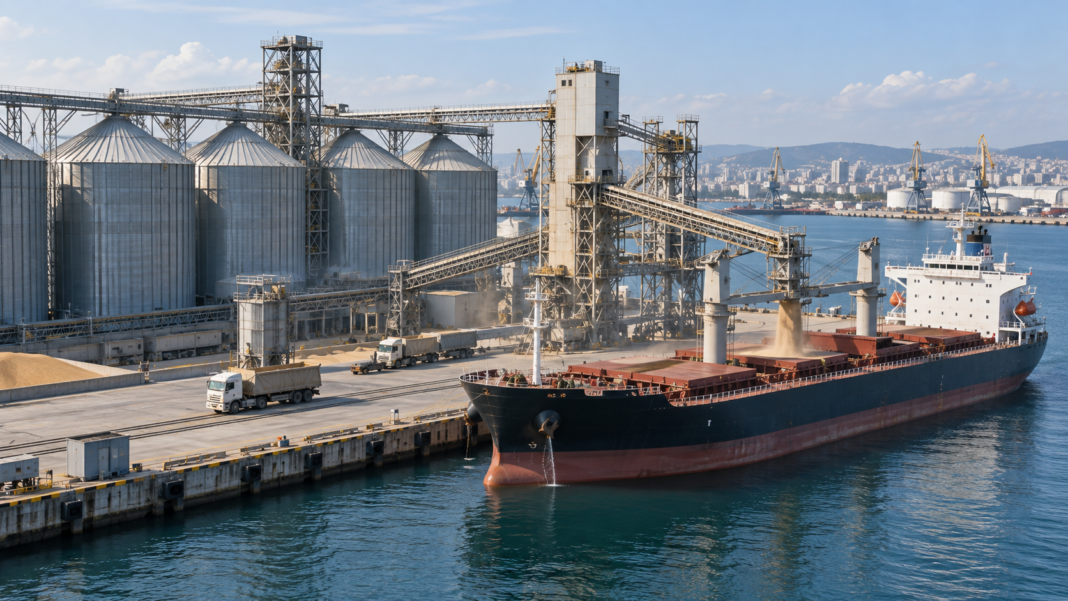
Attacks on Ukraine’s ports and agricultural transport routes are creating risks for food supplies far beyond the war zone, EU diplomats have warned. A statement reported by The Brussels Times highlights the exposure of Mauritius and Seychelles, whose dependence on imported food leaves them vulnerable to disruption and higher international prices.
The EU delegation linked those pressures to damaged port facilities, warehouses and inland logistics. Its central warning is about the ability to move an existing harvest to buyers, not only the amount of grain that farmers can produce.
A disrupted route can become a storage crisis
The delegation said Ukrainian grain exports had fallen sharply and warned that constrained storage could leave more than nine million tonnes exposed to spoilage. These are attributed warnings, not independently audited measurements of losses that have already occurred.
A separate EU diplomatic statement published for World Food Day specifies that grain exports in August were halved compared with the previous year. It describes the nine-million-tonne risk as grain, oilseeds and meals that could be left without adequate storage by November. That is more specific than treating the figure as an already destroyed grain stock.
The distinction changes how the warning should be understood. Export delays can leave harvested crops competing for warehouse space, restrict the cash available to farmers and disrupt preparations for the next planting season. The possible damage therefore extends beyond an individual shipment.
Import-dependent islands face overlapping pressures
For Mauritius and Seychelles, the delegation also pointed to the Middle East conflict and weather-related risks in Southern Africa. These are additional potential sources of pressure, rather than evidence that any single shock explains every local food-price change.
The EU has used its Solidarity Lanes to provide alternative routes for Ukrainian goods. Its diplomatic statements argue that more storage and more efficient inland connections can help, but cannot fully replace secure maritime access.
The warning concerns several links in the same chain: production, storage, transport, insurance and delivery. Improving one link does not remove the risk at the others. The EU’s stated priority remains safe commercial navigation and an end to attacks on the infrastructure through which agricultural goods reach world markets.